Guide · 7 min read ·
Solar 0% VAT UK: Why Your Panels Cost Less to Fit (Until 2027)
If you have been weighing up solar for your home in Cumbria, here is something worth knowing before you ask for a quote. There used to be a chunky bit of tax sitting on top of the whole job. But not any more.
At a glance
- VAT on domestic solar in Great Britain
- 0%
- In place since
- 1 April 2022
- Runs until
- 31 March 2027
- Rate after that
- 5%
- Batteries zero-rated since
- 1 February 2024
- Northern Ireland zero-rated since
- 1 May 2023
- Anything to claim or fill in
- Nothing
The quick answer
Solar fitted on a home in Great Britain has carried 0% VAT since April 2022, and that rate runs until 31 March 2027 before it is due to go back to 5%. Batteries are zero-rated too, whether you fit them with panels or on their own. You do not claim anything or fill in a form. A qualified installer simply leaves the VAT off your quote, so the fitted job costs you less than it would have pre 2022.
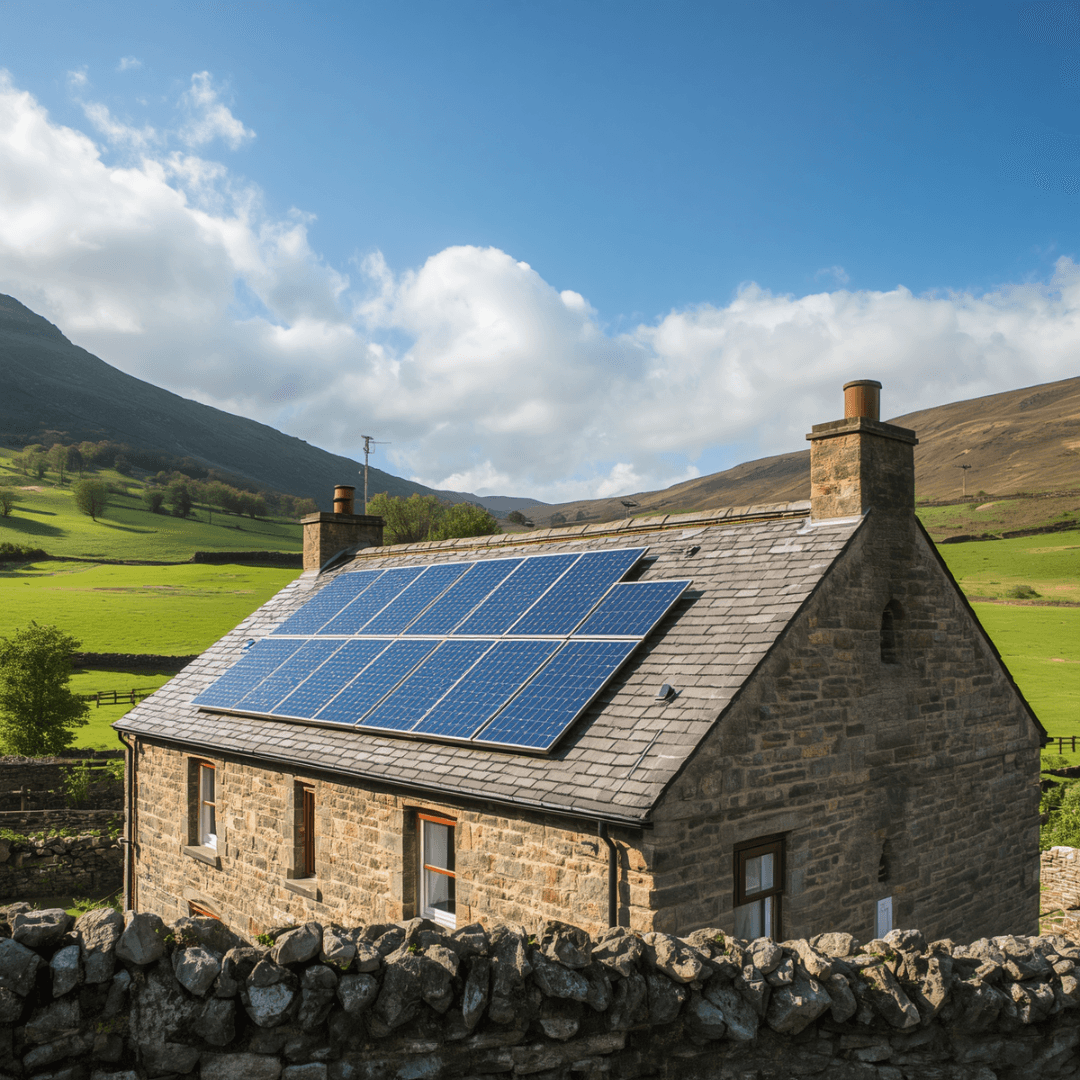
What Solar 0% VAT UK actually means for your money
Most people pricing up solar brace for VAT on top of everything: the panels, the inverter, the fitting, the lot. For years, that is exactly how it worked.
Since 1 April 2022, solar fitted on a home in Great Britain has been zero-rated for VAT. The installer does not add it. You do not apply for it or claim it back. It comes off at the quote stage and you never see it.
That is a real saving on the cost of getting a system fitted, and it is the reason solar costs less to put in today than it did pre 2022.
Why this matters more to homeowners in Cumbria
A lot of homes around Cumbria, especially in the rural areas, run off the mains gas grid and heat with oil or LPG instead. If that is you, you already know the routine: the price climbs most years. And with volatile markets like the energy crisis of 2022, and more recently the conflict around the Strait of Hormuz, the cost of that fuel is hard to predict from one delivery to the next.
With solar, you sidestep a good chunk of that. The catch is that solar won't heat your home on its own. Pair it with an air source heat pump, though, and you do two things at once: bring your bills down, and lean less on fossil fuels you have no say over.
Because that is really the heart of it. Energy companies have spiked their rates with little warning for years. The government steps in to take some of the pressure off, but it is never quite enough. The UK now pays some of the highest electricity prices in the world. What does that tell you? That the less you depend on the energy companies, the better off you are. Making your own power is one of the few ways to take a bit of that control back.
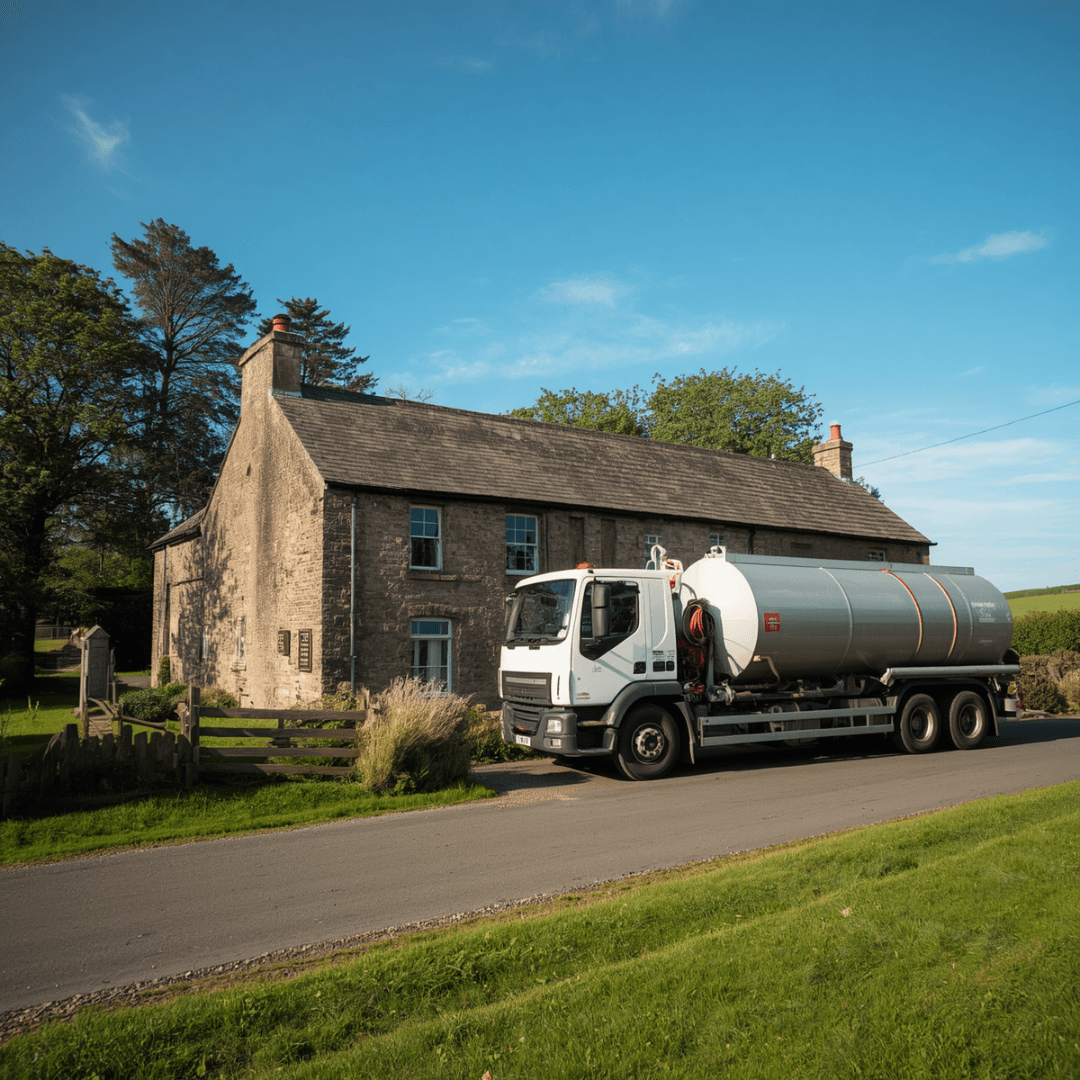
Savings & costings
The 0% rate is a straight saving. VAT used to be added on top of the whole job, so you paid tax on the kit and the fitting both. That tax is gone, which takes a real chunk off what a system costs to put in.
What the change does not do is set one price for everyone, because no two roofs are the same. Which way your roof faces, its pitch and size, how many panels you fit, whether you add a battery, all of it moves the final figure. So the only number worth trusting is one worked out for your actual roof, with the 0% already taken off.
Imagine smaller energy bills, whatever the time of year
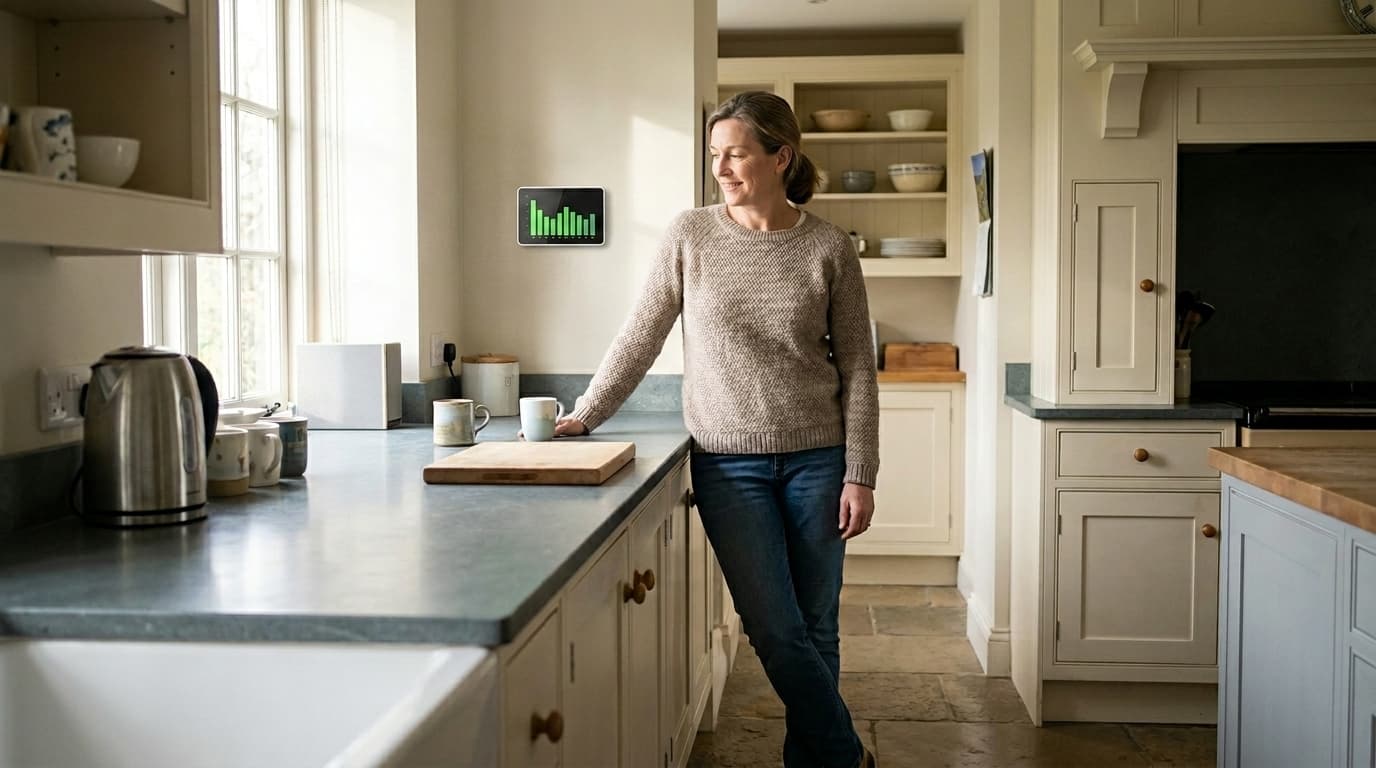
It is the middle of a weekday and the house is empty, everyone out at work or school. On the roof, the panels are running the fridge, the router and the washing machine you set going on your way out the door this morning. None of that is coming from the grid. You are buying less from your supplier than you were this time last year.
And the power you make during the day that doesn't get used is dumped right back into the grid. And the best part, the energy companies will pay you for that energy, through what is called the Smart Export Guarantee. It won't save you enough to splash out on a super yacht, but it could be enough to put towards another bill, or even a holiday.
The myth: “Zero VAT sounds too good to be true”
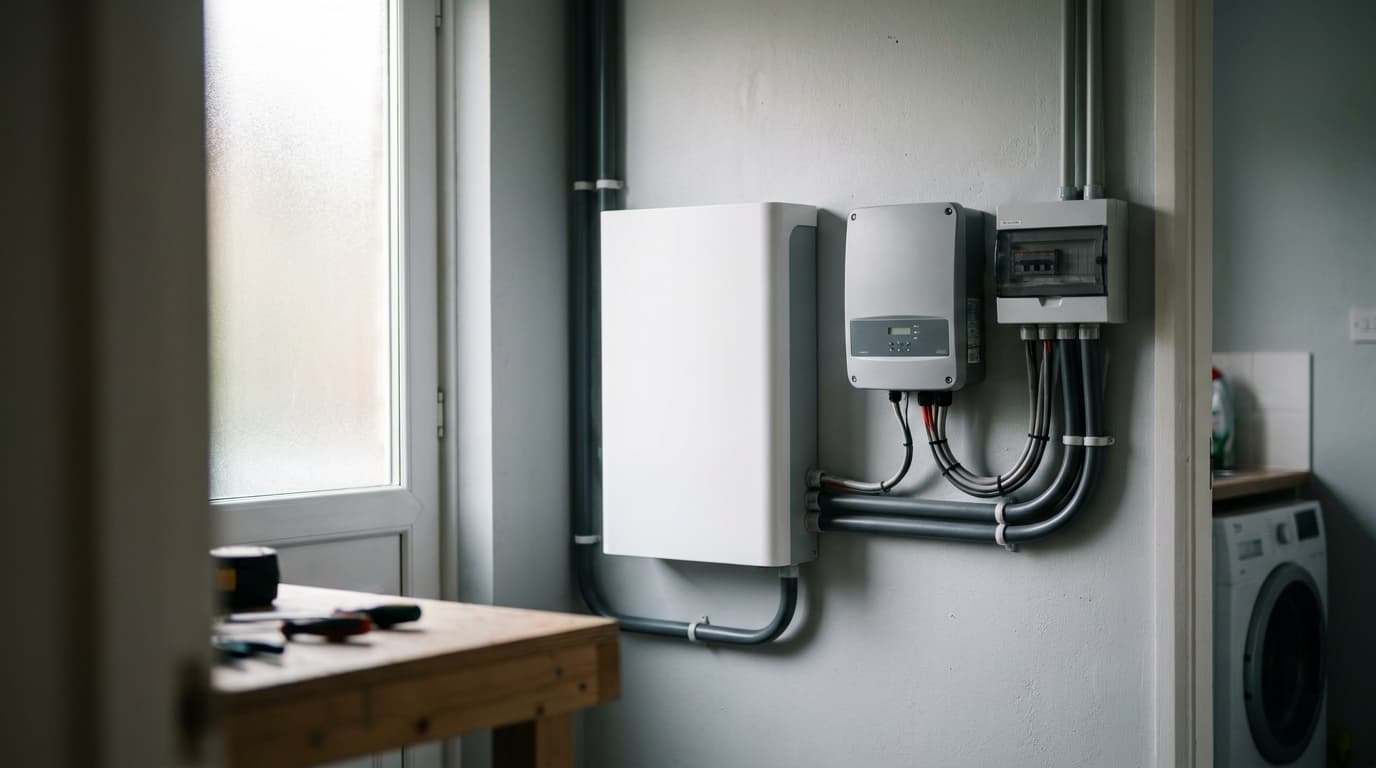
When a cost drops to nothing overnight, it is natural to assume there is a catch somewhere. With the 0% rate on solar, there genuinely isn't one. It is written into the government's VAT rules for energy-saving materials, and solar panels are on that list. And since 1 February 2024, batteries have been added to that 0% VAT list too, whether you add one to a solar system or just want a battery on its own.
The honest detail is the timing. This is a temporary rate. It runs until 31 March 2027 and is then due to return to 5%. And it covers the supply and fitting done by a qualified installer.
Who the zero rate covers
It is simpler than most people expect. The 0% VAT rate applies when:
- the property is a home in the UK,
- the work is supplying and fitting a qualifying energy-saving material, such as solar panels or battery storage,
- and a qualified installer carries out the work.
Great Britain has had the rate since April 2022, and Northern Ireland since 1 May 2023, so wherever you are in the UK you are covered. Most homes here in Cumbria qualify without a second thought. If you are not sure where you stand, ask before you commit to anything.
How it works, without the hassle
- Tell us about your home and what you want from solar.
- We line you up with a vetted, local installer who knows the area.
- Your quote comes back with 0% VAT already taken off.
No pressure, no doorstep sales, no rushed decision.
Why it is worth not leaving it
Here is the honest version of the urgency. The 0% rate runs until 31 March 2027. Unless the government brings in new law to extend it, the rate after that is due to go back to 5%. That is a real window, not one we made up.
The other thing worth knowing is that installers get busy in the lighter months, when the days are long and the weather is kinder for roof work. Booking earlier in the year tends to mean a smoother job and a shorter wait. There is no need to panic. But there is good reason not to sit on it either.
No risk in finding out where you stand
You can see what solar looks like for your home without committing to anything. The check is free, there is no obligation, and there is no pushy installer waiting on the other end of it.
We would rather you had clear, honest numbers and made your own mind up in your own time. That is how we like to work.
Common questions
Do I have to apply for the 0% VAT rate?
No. There is no form and nothing to claim back. A qualified installer simply leaves the VAT off your quote, so the price you are given already has it taken out.
Does 0% VAT apply to batteries as well as panels?
Yes. Since 1 February 2024 battery storage is zero-rated too, whether you fit a battery alongside solar panels or on its own.
When does the 0% rate end?
It is scheduled to run until 31 March 2027, after which it is due to return to 5%. That is the current legislation, and it would take new law to extend it.
Does it apply in Northern Ireland?
Yes. Great Britain has had the zero rate since April 2022 and Northern Ireland since 1 May 2023 under the Windsor Framework, so homes across the UK are covered.
What are the conditions?
The property has to be a home in the UK, the work has to be supplying and fitting a qualifying energy-saving material such as solar panels or battery storage, and a qualified installer has to carry out the work.
See what your roof could do
Answer a few quick questions and we will show you what solar could look like for your home, with the 0% VAT already built in.
Take the 60-second solar quiz